
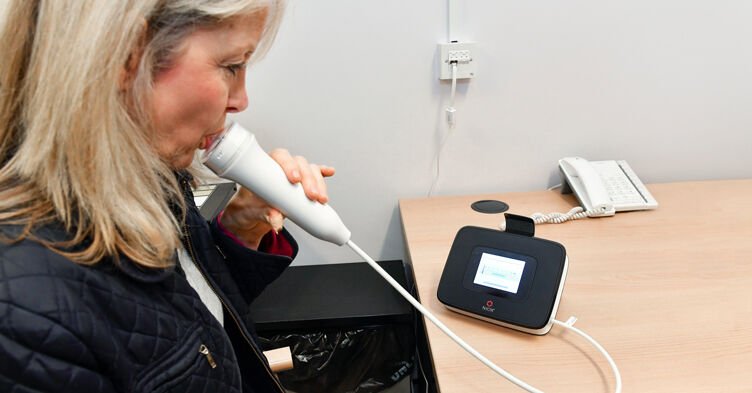
FeNO
FENO testing is a simple, non-invasive way to detect airway inflammation especially in asthma
Fractional Exhaled Nitric Oxide Testing
FeNO testing, or fractional exhaled nitric oxide testing, is a simple and non-invasive way to check for airway inflammation, especially in asthma.
It measures the amount of nitric oxide in exhaled breath, which indicates inflammation. This test helps doctors create personalised treatment plans, track disease progress, and evaluate the success of anti-inflammatory treatments. Its straightforward process and fast results make it an important tool in respiratory care, allowing for quick actions to enhance patient outcomes.
FeNO can be performed on its own or in conjunction with Spirometry with reversibility to confirm a diagnosis of asthma.
Learn more about asthma here
FeNO Demonstration Video
*NB: This Video if for Demonstration purposes only.
FeNO Procedure
-
STEP 1
Your physiologist will take a detailed medical history, which will include your current symptoms, any previous health issues, and the medications you are currently taking.This ensures that a complete understanding of your health status is obtained.
-
STEP 2
You will need to answer some questions to confirm you are fit for testing. This questionnaire will be emailed to you with your booking confirmation and again on the day of testing to check for any changes.
-
STEP 3
Your physiologist will then take several measurements, including your height, weight, body mass index (BMI), oxygen saturation levels, heart rate, and blood pressure. These assessments are essential for gaining a comprehensive understanding of your overall health and lung function.
-
STEP 4
The physiologist will then thoroughly explain the test and show you a short video which will demonstrate the test.
-
STEP 5
You results will be reported on within 48 hours and sent to clinican that referred you. The clinician will discuss the results The results will help your doctor, nurse, or consultant make an accurate diagnosis.
Frequently Asked Questions.
-
Yes, FeNO testing is suitable for patients age 5 and above. As measurement requires patient cooperation, some children below the age of 7 may require additional coaching and encouragement and in some cases it may not be possible to obtain a result.
-
Avoid smoking before the FeNO test, as it can impact the results. Also, refrain from eating nitrate-rich foods like green leafy vegetables and beetroot, as well as caffeine on the day of the test.
Pre test instructions will be sent to you prior to your test as a reminder of how to prepare.
-
There are no contraindications to FeNO testing. It is a completely safe test that takes minutes to perform.
-
FeNO test results indicate the level of inflammation in your airways. Higher levels of nitric oxide suggest increased inflammation, which may indicate poorly controlled asthma or other respiratory conditions. Your healthcare provider will explain what your specific results mean and how they impact your treatment plan.
-
Results are often available immediately after the test. Your healthcare provider will review the results with you and discuss any necessary follow-up or treatment plans.
-
The test itself typically takes about 5-10 minutes. However, you may need to spend additional time at the clinic for preparation and post-test discussions with your healthcare provider.